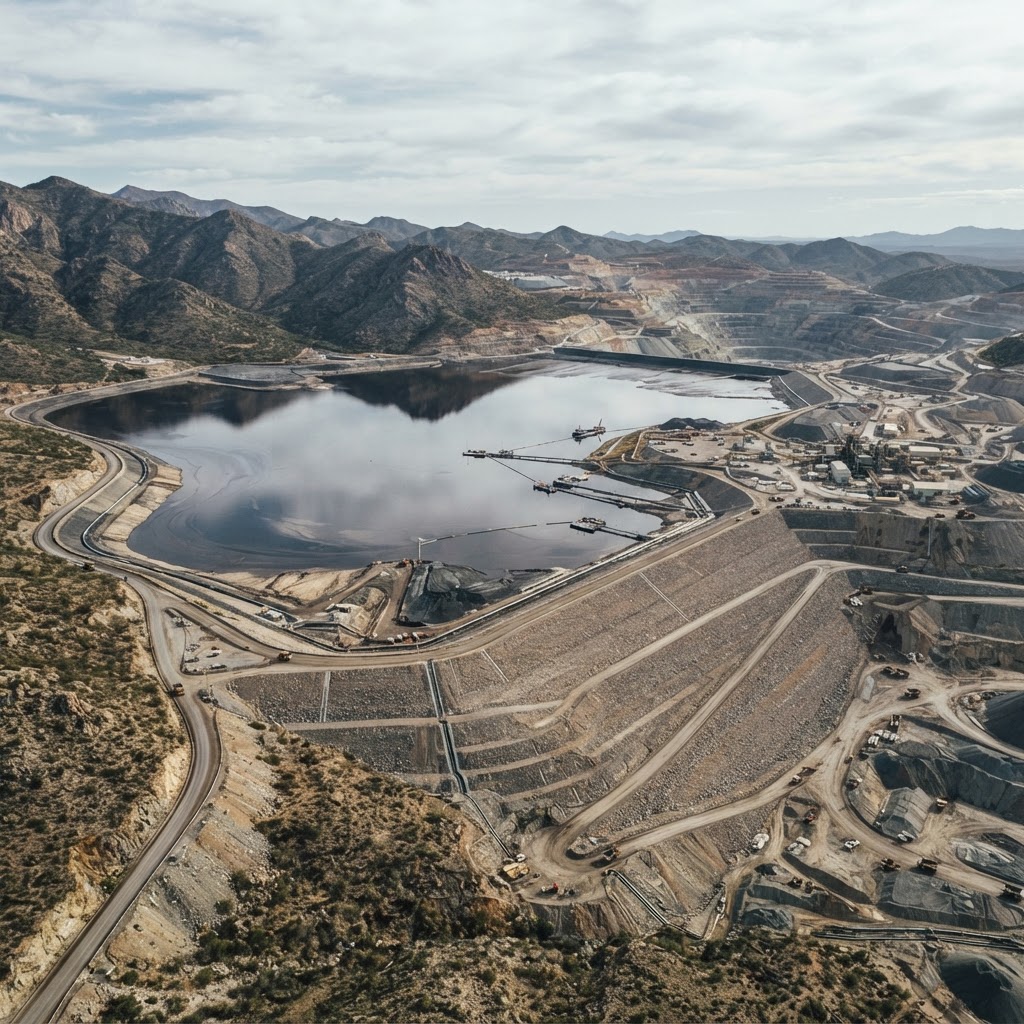
Critical Procedures for Tailings Management
Our governance, compliance, and operational framework for safe and sustainable tailings storage — the non-negotiable procedures that secure safety and maintain our social license to operate.
These procedures represent the non-negotiable standards required to secure safety, minimize environmental risk, and maintain the Social License to Operate (SLO) for any Tailings Storage Facility (TSF).
1. Governance and Accountability Framework
Establish clear Board-level accountability for TSF safety, including the appointment of a dedicated, independent Responsible Tailings Facility Engineer (RTFE). This framework must foster a culture where workers are empowered to halt operations if safety is compromised.
2. Mandatory GISTM Compliance
Achieve and maintain auditable compliance with the Global Industry Standard on Tailings Management (GISTM) as the minimum performance requirement. Compliance must be verified through regular, independent third-party audits throughout the life of the mine.
3. Geotechnical and Seismic Integrity
Prioritize geotechnical stability in site selection, conducting detailed investigations to characterize subsurface conditions. Design the TSF to withstand the Maximum Credible Earthquake (MCE) and the Probable Maximum Precipitation (PMP) to prevent catastrophic failure.
4. Independent Technical Review Board (ITRB)
Establish a multidisciplinary ITRB of external experts with the mandate to challenge and review all major design, construction, and operational decisions. The ITRB must report directly to senior leadership, and its recommendations must be treated as mandatory.
5. Water Balance and Drainage Control
Implement a strict, real-time Water Balance Model and robust internal drainage systems (e.g., filter blankets) to prevent over-saturation of the tailings mass. Proactive drainage is essential to control internal water pressure and mitigate liquefaction risk.
6. Emergency Response and Preparedness Plan (ERP)
Develop a comprehensive ERP based on detailed downstream inundation modeling and clear communication protocols. The plan must be tested through mandatory annual rehearsal drills involving all potentially affected communities and local emergency services.
7. Life-of-Mine Closure and Financial Assurance
Integrate progressive rehabilitation and final closure planning into the design from the project’s inception. Maintain adequate financial assurance (e.g., trust funds) throughout the TSF life to guarantee that closure and perpetual post-closure monitoring can be fully executed.
8. Digital Monitoring and Instrumentation
Deploy advanced digital systems, including piezometers and remote sensing technologies (e.g., InSAR), to continuously monitor structural deformation and internal pressures. Data must feed into automated alerting systems for early risk identification.
9. Tailings Chemistry and Dewatering Technology
Actively manage tailings chemistry to mitigate the risk of Acid Rock Drainage (ARD). Prioritize dewatered technologies, such as Paste or Filtered (Dry Stack) Tailings, where feasible, to significantly reduce stored water volume and improve long-term stability.
10. Community Engagement and Transparency
Ensure continuous engagement with local and downstream stakeholders regarding TSF safety and performance. Commit to public disclosure of key safety data and audit summaries, supported by an accessible Grievance Mechanism for all community concerns.
For FULL DETAILS of ‘Critical Procedures for Tailings Management’, please send us a request via Email.
Universal Applicability of the Protocol
1. Focus on Foundational Risk Factors
The protocol centers on fundamental hazards that are present in every TSF:
- →Geotechnical Stability: The risk of dam failure due to seismic events (MCE) or extreme rainfall (PMP) is a physical risk, not a commodity risk. All TSFs require the same level of geotechnical investigation and stability assurance.
- →Hydraulic Control: Water balance and pore pressure management (Point 5) are essential for stability in all TSFs, as over-saturation is the leading cause of liquefaction.
2. Adherence to Global Standards
The mandatory inclusion of the Global Industry Standard on Tailings Management (GISTM) (Point 2) ensures universal coverage. GISTM is the single recognized global benchmark for TSFs, requiring compliance for all types of facilities regardless of the jurisdiction or mineral being mined.
3. Addressing Diverse Material Risks
The procedures account for the chemical and physical variability of tailings:
- →Chemical Risk (ARD/ML): Point 9 addresses Acid Rock Drainage (ARD) and metal leaching (ML). While some minerals (like sulfides) are more prone to ARD, the requirement to characterize and mitigate the chemical risk is mandatory for every project.
- →Physical Risk (Dewatering): The focus on dewatered technologies like Paste and Filtered Tailings (Point 9) is relevant because these technologies are often used regardless of the mineral being mined to achieve superior long-term stability and reduce risk.