1. Safety and Emergency Response (Life-Saving Function)
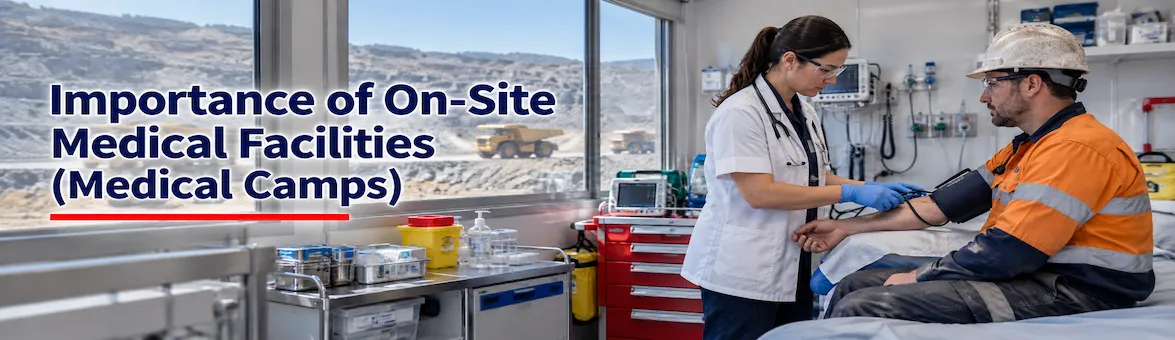
The primary role of a medical camp is to provide immediate, life-saving care in the event of an accident or medical emergency.
Golden Hour Intervention: In trauma cases, the first hour (the ‘Golden Hour’) is critical. On-site medical facilities ensure that immediate stabilization and treatment are available, significantly improving survival rates and outcomes.
Stabilization and Transfer: The camp provides initial stabilization before the patient is transferred to a higher-level medical facility, reducing the risk of deterioration during transport.
Toxicological Incidents: In cases of chemical exposure or poisoning, the camp provides immediate decontamination and antidote administration, which can be the difference between life and death.
2. Occupational Health and Preventative Care (Risk Mitigation)
Beyond emergency response, the medical camp plays a crucial role in preventative health and risk mitigation.
Fitness to Work and Baseline Testing: Pre-employment and periodic medical examinations ensure that workers are physically fit for their assigned tasks and establish baseline health data for future comparison.
Monitoring Occupational Exposure: The camp provides ongoing monitoring for occupational diseases, such as noise-induced hearing loss or respiratory conditions, enabling early intervention before permanent damage occurs.
Infection and Epidemic Control: In remote camps, the risk of infectious disease outbreaks is high. The medical camp provides surveillance, vaccination, and rapid response to prevent widespread illness.
3. Productivity and Financial Impact
A medical camp directly contributes to operational efficiency and cost savings.
Reduced Absenteeism: Immediate access to medical care reduces the duration of illness and injury-related absences, keeping the workforce productive.
Drug and Alcohol Management: On-site testing capabilities for drugs and alcohol ensure a safe working environment and reduce the risk of accidents caused by substance abuse.
Reduced Staff Turnover: The presence of a medical camp provides a sense of security and well-being, improving staff morale and reducing turnover.
4. Regulatory Compliance and Social License
On-site medical facilities are a legal requirement and a key component of responsible mining.
Legal Compliance: Most jurisdictions require mines to have on-site medical facilities based on the size and risk profile of the operation. Compliance is non-negotiable.
Duty of Care: Providing medical facilities demonstrates the company’s duty of care to its workforce, a fundamental ethical and legal obligation.
Stakeholder Trust: A well-equipped medical camp that also serves the local community (where appropriate) builds trust and goodwill, strengthening the Social License to Operate (SLO).